Rawan Atef
Profile
Content Creator
Rawan Atef is a content writer with several years of experience in logistics, trade compliance, and global supply chains. She focuses on producing clear, practical content that helps businesses understand customs regulations, manage cross-border challenges, and stay aligned with international trade trends.
Blogs by Rawan Atef

What Is an ECCN Number, and Does It Mean You Need a License?
Exporting a product is not simply a matter of knowing what the product is. You also need to know how U.S. export-control regulations classify it. That is the role of an Export Control Classification Number (ECCN). An ECCN identifies the specific category of controlled items to which a product belongs under the U.S. Export Administration Regulations (EAR). But the classification itself does not determine whether the shipment needs a license. The real export-control question comes next: does this classification, combined with the destination, end user, end use, and other applicable controls, allow the shipment to proceed? For exporters dealing with advanced technology, computing equipment, AI hardware, semiconductors, encryption, or telecommunications products, getting that distinction right can determine whether a shipment moves smoothly or requires further regulatory action.

What Is a Consignee? Receiver, Owner, or Importer of Record
A company can be named as the consignee on a shipment and still be unable to clear its own goods. That is because “consignee” describes who is entitled to receive the shipment; it does not automatically determine who owns the goods, who pays the import duties, or who has the legal standing to declare them to customs. These roles often sit with the same company, but they do not have to. A buyer may be the consignee but lack the local registration required to import. A seller may be responsible for duties under the agreed Incoterms rule. An IOR provider may have the customs standing needed to make the declaration. Understanding that distinction matters because a shipment can have the correct consignee, complete shipping documents, and still be unable to clear customs.
Bill of Lading: What It Does, Which Types Are Negotiable, and Who Issues It
Every bill of lading sits between three key parties: the shipper, who supplies the goods and shipment information; the carrier, who transports the goods and issues the document; and the consignee, who is identified to receive them. The bill of lading itself performs three core functions: it serves as a receipt for the goods, provides evidence of the contract of carriage, and, in its negotiable forms, can function as a document of title. The distinction between negotiable and non-negotiable bills is particularly important because it determines whether control of the goods can be transferred through the document while the cargo is still in transit. The document's issuer, consignee, notify party, and other fields can also affect how the shipment is handled at destination.

What Is a Commercial Invoice, and Why a Sales Invoice Won’t Do
A commercial invoice is one of the key documents used to establish what is being imported, who is involved in the transaction, and what value customs should assess. Although it originates with the seller, its significance extends beyond the commercial sale: customs authorities use the information on the invoice to assess classification, origin, valuation, duties, and taxes. The distinction between the invoice prepared by the seller and the customs declaration made by the Importer of Record (IOR) is critical. The seller is responsible for preparing and certifying the commercial invoice, while the IOR is responsible for declaring the relevant information to the destination customs authority. A commercially accurate invoice therefore does not, by itself, guarantee a correct customs declaration. This guide examines what a commercial invoice must contain, how its declared value is treated for customs purposes, when the invoice price may differ from customs value, and where responsibility sits when the information is challenged.

Customs Documents: What Is Required and Who Can File Them
Customs documents establish what is arriving, where it came from, what it is worth, and on what legal basis it can be released. But having the required paperwork does not necessarily mean a company can file the customs entry. That distinction is central to customs clearance. The customs entry is the legal declaration; the commercial invoice, packing list, origin evidence, permits, and security filings support what that entry declares. The critical question is therefore not only which documents are required, but which party has the legal standing to file them. This article covers customs documentation for commercial shipments, not traveler declarations or postal forms.

Shipment Stuck in Customs: How Long Does Customs Clearance Take and What to Do
Most customs holds are documentation problems that can be resolved once you provide the missing information. A smaller number follow a different path because the issue is not the paperwork itself. For commercial cargo, storage, demurrage, and detention costs can continue while the shipment is held. The key is to identify why the shipment is being held, whether the delay is still within a reasonable range, and whether the party expected to act has the legal standing required to make the customs entry.

Shipping Documents: The Four Categories and Who Answers For Them
Shipping documents do more than accompany goods from origin to destination. They establish what is being shipped, who is involved, where the goods came from, how they are being transported, and what customs should assess. One distinction matters more than the checklist itself: the party that prepares a document is not necessarily the party legally accountable for what it declares. A seller may prepare the commercial invoice, a carrier may issue the bill of lading, and a broker may transmit the entry, yet the Importer of Record answers to customs for the classification, value, origin, and duty declared. This article breaks shipping documents into four categories, explains who prepares each one, and clarifies where accountability sits.
Delivered Duty Paid (DDP): What the Seller Actually Takes On
DDP can make an international sale look straightforward: the buyer receives the goods at the agreed destination with import duties and taxes already paid. For the seller, it is more than a shipping term. Under the Incoterms® 2020 rules, DDP is the only rule that places import clearance on the seller, which means the seller must be able to act as the Importer of Record (IOR) in the buyer's country. That requirement is where DDP arrangements most often break down in practice. This article explains what DDP requires, how it compares with DAP, who pays duties, the risks sellers need to price for, and where a registered importer of record is required.

Incoterms® 2020: The Eleven Rules, Compared
A three-letter code can decide who pays the freight, who carries the risk, and who faces customs at the border. These codes are the Incoterms® 2020 rules, published by the International Chamber of Commerce (ICC) to define key responsibilities between buyers and sellers in contracts for the sale of goods. The selected rule sets out how costs, delivery, risk, and export/import formalities are allocated between the parties, subject to applicable law. This guide compares all 11 rules, the combinations buyers most often confuse, and how the choice can affect which party handles import or export formalities and whether an Importer of Record or Exporter of Record structure may be required.

Harmonized System (HS) Codes: Structure, Lookup, and Accountability
Every product has a customs identity. Before a shipment can be assessed for duty, screened for trade remedies, or cleared through customs, it needs to be placed into the right classification. That classification begins with the Harmonized System (HS) code—a six-digit international framework that turns everything from network equipment and machinery to components and finished goods into a standardized customs language. Maintained by the World Customs Organization (WCO), the Harmonized System provides the foundation used across more than 200 countries and economies. But those six digits are only the beginning: individual countries extend the classification for their own tariff and statistical requirements, making the correct national classification essential to the import process. Understanding how HS codes are structured, where to find the right classification, and who is accountable for it can help importers avoid unnecessary duty costs, compliance issues, and delays at the border.
Countervailing Duties (CVDs): What They Are, How They're Calculated, and What They Cost Importers
Countervailing duties are among the most consequential and least understood trade measures shaping global supply chains in 2026. Active CVD orders on Chinese solar panels, steel, aluminum, and hundreds of other product categories add high cost to imports, and the landscape keeps shifting: the EU imposed definitive countervailing duties on Chinese electric vehicles in late 2024, and that case is still being contested at the WTO. This guide explains what countervailing duties are, how they are investigated and calculated, which sectors they hit hardest, and, crucially, who is legally responsible for paying them. That last answer shapes how every import with CVD exposure should be structured.

IOR Services for Maintenance: Speed, Savings & Simplicity
IOR services for maintenance and repair operations make all the difference they.....................

How an Importer of Record IOR Can Reduce Pain in Supply Chain
Trading internationally can be complicated, but an Importer of Record for international supply chain can help in...........
How Amazon Ocean Freight Is Changing Global Trade?
Amazon has quietly registered with the Federal Maritime Commission (FMC) to provide Amazon Ocean Freight services in the USA. Therefore, the move will

Easily Deliver Imports to Amazon FBA Without U.S. Registration
Fulfillment by Amazon is one of the most advanced logistics networks. Many sellers worldwide deliver imports to Amazon FBA with ease. Your business can greatly benefit from.........

Bans, Tariffs, and Other Export Control Solutions
A product can be cheaper, better, and in demand abroad, and still never reach the shelf. Not because customers do not want it, but because
The Real Benefits of an Importer of Record (IOR) Service
An Importer of Record (IOR) service exists to carry exactly that burden. For any company building a cross-border logistics strategy, understanding......

What The Customs Revenue Benchmarking Database Will Do For International Trade
In modern trade, a Customs Revenue Benchmarking Database seems to be the Holy Grail that several nations seek.
Distribution Center: What It Is and How It Works
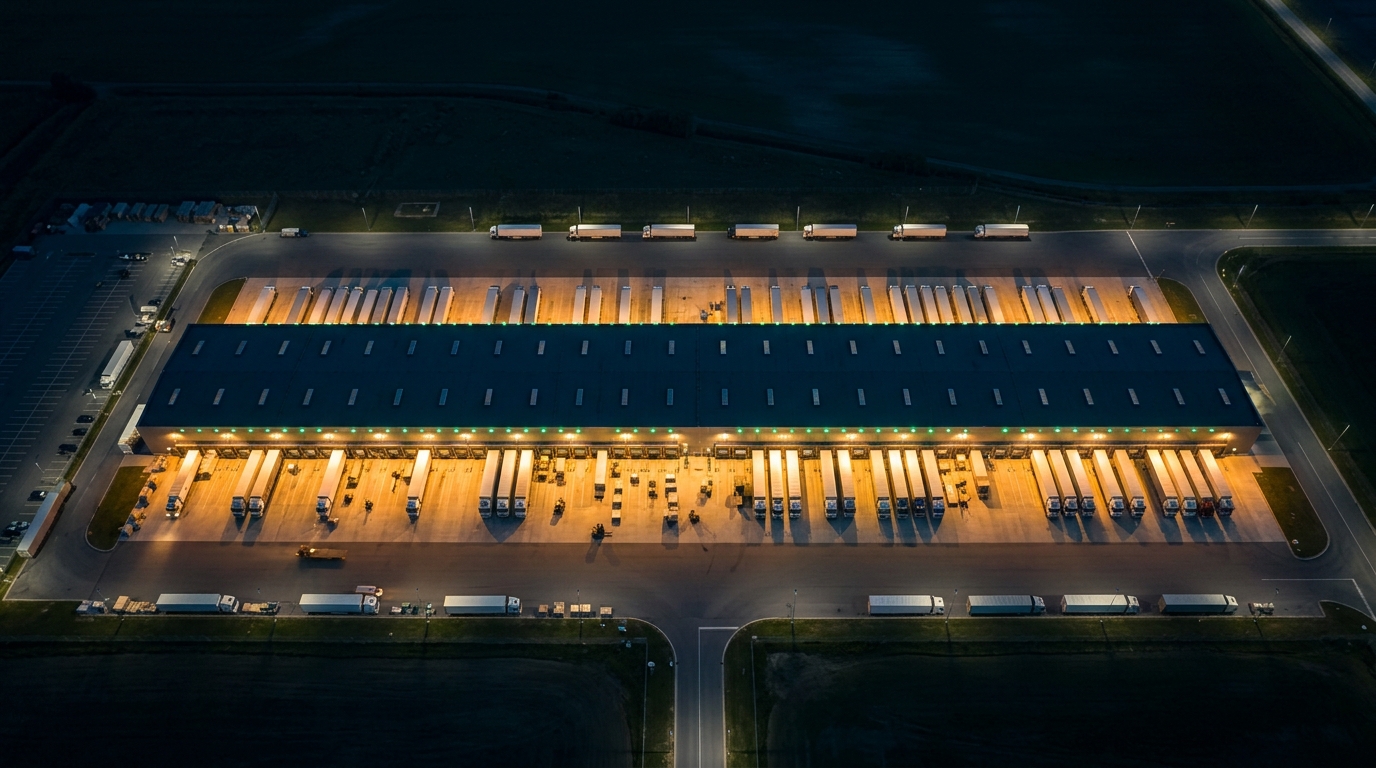
Behind every fast delivery is a facility built not to store goods, but to move them. That facility is the distribution center. A distribution center is a logistics facility used to receive, store briefly, process, and ship finished goods to retailers, wholesalers, or end customers. Unlike traditional warehousing, it is designed around product flow rather than long-term storage, which is what makes rapid order fulfillment possible. For any business moving physical goods at scale, understanding how a distribution center works is central to understanding modern supply chains.
EEI Filing (Electronic Export Information): What It Is, Who Must File, and When It's Required
If you are exporting goods from the United States, you are likely required to file Electronic Export Information (EEI) through the US Census Bureau's Automated Export System (AES) before your shipment departs. This is not optional paperwork. Failure to file, or filing inaccurate information, carries civil penalties of up to $10,000 per violation, and the legal responsibility rests with the exporter even when a third party files on their behalf. This guide explains what EEI is, when it is required, who files it, the data it contains, the penalties for getting it wrong, and how iorservice.com manages EEI filing as your Exporter of Record.
Export Control Compliance: What It Is and Why It Matters
International trade depends on robust export control compliance to ensure that goods, technology, and services do not end up in the wrong hands. Export control compliance means reviewing what you ship, who you ship it to, where it is going, and how it will be used against the export laws that apply before any transfer to a foreign country or foreign person takes place. Get it wrong, and the consequences range from heavy fines to criminal exposure and lasting reputational damage. For businesses moving controlled or high-value technology, this is not a back-office formality. It is a core part of getting goods out the door legally.
Exporter of Record vs USPPI: What's the Difference?
A shipment of electronics sits in a US port, going nowhere. The buyer is waiting; the paperwork looks complete, yet customs has flagged it because one field lists the wrong party as the exporter. The shipper assumed "exporter" and "USPPI" meant the same thing, and that small assumption became a costly delay. It happens more often than most traders realize, because the two terms sound interchangeable but carry very different responsibilities under US law. This article clears up the difference, explains who files Electronic Export Information (EEI) in AES, and shows exactly who can and cannot serve as a USPPI.

Global Customs Management: What It Covers, Why It Matters, and How to Deliver It Across Many Countries
Global customs management is the strategic function that governs how goods cross international borders, covering tariff classification, import and export compliance, duty payment, free trade agreement (FTA) optimization, and documentation across every country in a company's supply chain. The stakes are material: according to BCG's 2025 analysis, customs authorities levied an estimated $600 to $900 billion in global tariffs in 2024, and preventable classification errors account for a large share of shipment delays. For companies without an internal customs team, iorservice.com delivers global customs management as a fully managed service, acting as the registered Importer and Exporter of Record across many markets.

Harmonized Tariff Schedule (HTS): What It Is, How to Read It, and How It Affects Your Imports
Correct tariff classification has rarely mattered more than it does now. Recent tariff changes and trade-policy shifts have driven a surge of importers to the US International Trade Commission's HTS tools, all trying to confirm one thing: the right code for their product. That single code determines the duty you pay, whether your shipment clears smoothly, and where the legal liability sits if it is wrong. This guide explains what the Harmonized Tariff Schedule is, how an HTS code is structured, how to find the correct one, and why misclassification is a risk that falls on the importer. For companies importing IT equipment, telecoms hardware, or industrial goods across multiple countries, classification is not just a compliance task. It is a multi-country operational requirement.

VAT Refund: What It Is and How It Works
If you have paid VAT abroad, whether as a traveler or a business, you may be able to claim a portion of it back. A VAT refund is the recovery of value-added tax paid on goods or services when the claimant qualifies under the local rules of the country where the tax was charged. Because VAT is a consumption tax applied in many countries, including those across Europe and others such as Australia, Japan, and Canada, the refund routes differ depending on who you are and what you bought. This guide covers the three main refund situations: non-EU tourists reclaiming VAT on goods they export, businesses recovering VAT incurred abroad, and companies handling import VAT as part of cross-border trade.

Importer of Record Canada (IOR): Meaning, Requirements & How It Works
When goods cross into Canada, responsibility doesn’t get shared; it gets assigned. Every declaration, duty payment, and post-entry audit traces back to a single entity: the Importer of Record. That designation isn’t just a formality. It determines who the Canada Border Services Agency holds accountable if something goes wrong, whether it’s at the border or years after clearance. Get it right, and your shipment moves. Get it wrong, and delays, reassessments, and unexpected penalties follow. This guide breaks down exactly who qualifies as an Importer of Record, what the role actually requires, and how to structure your imports into Canada without exposing your business to compliance risk.
Pre-Export Screening: Restricted Party Checks, PVoC Conformity, and Why Both Matter Before Your Shipment Leaves
Pre-export screening covers two distinct compliance obligations that every exporter and importer must clear before goods leave the origin. The first is restricted party screening: confirming that no party in the transaction appears on a government denied, sanctioned, or restricted list. The second is pre-export conformity screening (PVoC): confirming that the goods meet the destination country's technical and safety standards before they ship. Miss the first, and you risk criminal prosecution and loss of export privileges. Miss the second, and your goods are detained at the destination border, or hit with penalties of 15 to 40% of value in countries like South Sudan. iorservice.com manages both as standard steps in every EOR and IOR engagement.
What Is Trade Compliance? Definition, Key Elements, and Why It Matters for Global Business
Trade compliance is getting harder, not easier. Enforcement intensified sharply through 2024 and stayed historically elevated in 2025, with regulators imposing record penalties and coordinating across agencies and borders. For any business moving goods internationally, import compliance and export compliance are no longer back-office formalities. They decide whether a shipment clears customs at all. This guide explains what trade compliance is, why it matters, its key elements, and how a business can build a robust compliance framework. For companies that import or export and have no legal entity, trade compliance is the difference between entering a market and being shut out of it.
What Is an Exporter of Record (EOR)?
A shipment is packed, labeled, and ready to leave the country, but export clearance stops because no one has been identified as legally responsible for the export. The buyer is waiting, the freight forwarder is booked, and the shipment cannot move until export compliance requirements are addressed. An Exporter of Record (EOR) is the entity legally responsible for ensuring goods are exported in compliance with the laws and regulations of the country of export. This includes product classification, export licensing, restricted-party screening, export filings, and recordkeeping requirements.
What Is an Importer of Record (IOR)?
Goods can be packed perfectly, priced correctly, and still sit stuck at a border because no eligible party is named to import them. That missing party is the Importer of Record. An Importer of Record (IOR) is the entity legally responsible for ensuring imported goods comply with the laws and regulations of the destination country, covering customs documentation, duties and taxes, and full compliance before the shipment is released.
Customs Bonds (What They Are & When You Need One)
A shipment can be fully documented, duty-paid, and ready for delivery, yet still be held at the border because of one missing requirement: a valid customs bond. In the United States, a customs bond is often required before U.S. Customs and Border Protection (CBP) will release commercial goods. A customs bond acts as a financial guarantee that duties, taxes, fees, and regulatory obligations will be met. When the bond is correctly arranged before arrival, clearance moves smoothly. When it is missing, inactive, or insufficient, shipments can face delays, storage charges, and unnecessary compliance issues.