What Is Trade Compliance? Definition, Key Elements, and Why It Matters for Global Business
Trade compliance is getting harder, not easier. Enforcement intensified sharply through 2024 and stayed historically elevated in 2025, with regulators imposing record penalties and coordinating across agencies and borders.
For any business moving goods internationally, import compliance and export compliance are no longer back-office formalities. They decide whether a shipment clears customs at all. This guide explains what trade compliance is, why it matters, its key elements, and how a business can build a robust compliance framework.
For companies that import or export and have no legal entity, trade compliance is the difference between entering a market and being shut out of it.
What Is Trade Compliance?
Trade compliance is the set of processes by which a business ensures its import and export activities conform to the laws, regulations, and requirements of every country involved in a transaction. It covers customs procedures, tariff classification, export controls, sanctions compliance, and documentation requirements, applied across each jurisdiction a shipment touches.
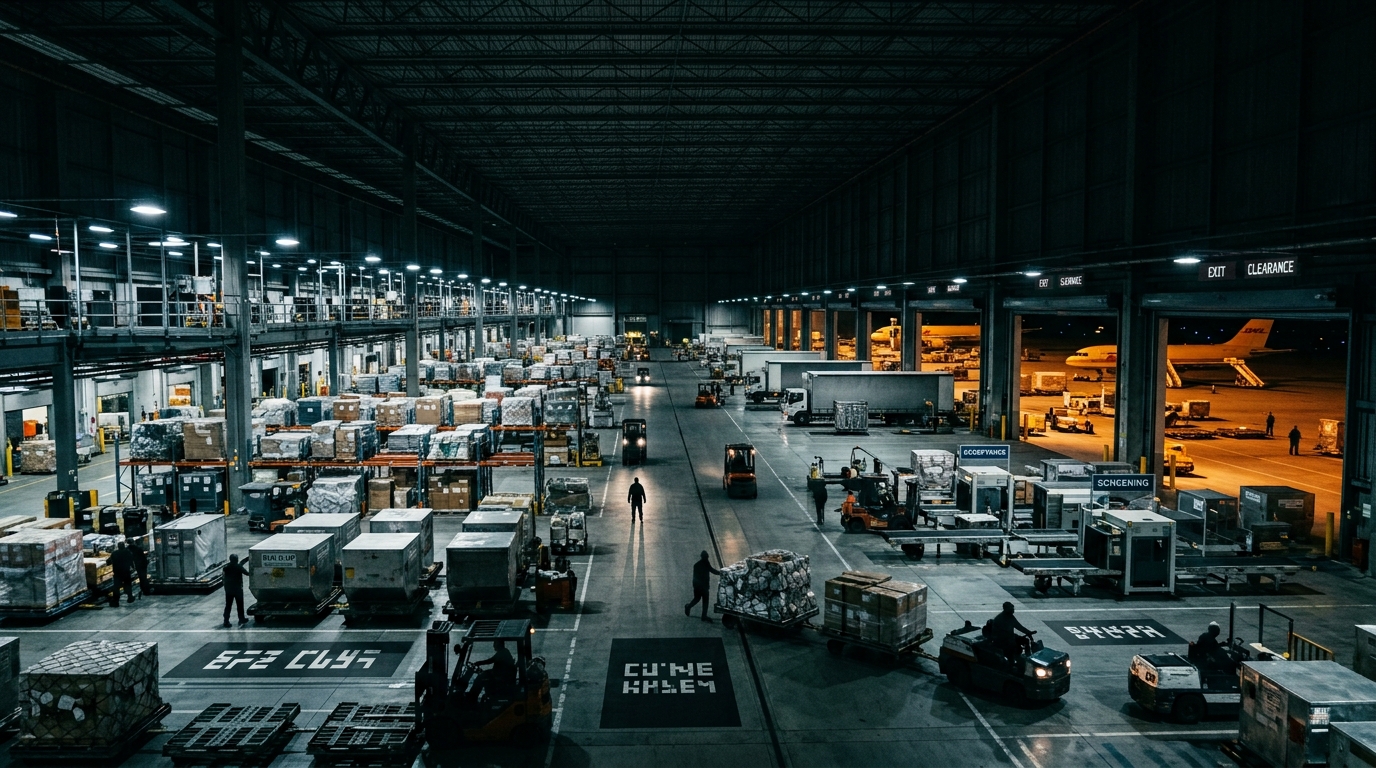
What makes it complex is that the rules differ by country and by product. A shipment that is fully compliant in one jurisdiction may need additional permits, licenses, or documentation in another. The same product can be freely tradable in one market and controlled in the next.
One principle holds everywhere: trade compliance is the legal responsibility of the importer and exporter. Not the freight forwarder, not the customs broker. They assist with the process, but the business itself carries the compliance burden.
Who Is Responsible for Trade Compliance?
The legal responsibility for trade compliance rests with the business, the importer or exporter named on the transaction. Freight forwarders and customs brokers support the process, but they do not assume legal liability for it. If something is misdeclared, the consequences land on the business.
Internally, that responsibility usually spans three roles:
Executive leadership, which sets compliance policy and accepts ultimate accountability.
A trade compliance manager, who handles day-to-day obligations and monitoring.
Operational staff who execute classification and documentation correctly on each shipment.
For companies without a legal entity in the destination country, this responsibility cannot be managed internally. Most customs authorities require a locally registered party to assume legal compliance responsibility. That is where an Importer of Record comes in, a registered entity that takes on the legal compliance burden on the company's behalf.
Key Elements of Trade Compliance
Trade compliance is not a single task but a set of interlocking elements. Most frameworks include the following, and a gap in any one can stall a shipment or trigger a penalty.
Tariff Classification (HS Codes)
Assigning correct Harmonized System codes to goods, which determines duty rates, permits, and licensing. The HS system underpins the vast majority of world merchandise trade and is the basis of every customs declaration.
Export Controls
Government restrictions on exporting certain goods, technologies, and services. Key US frameworks are the EAR (commercial and dual-use items) and ITAR (defense articles), which cover different categories under different rules.
Sanctions and Embargoes
Legal prohibitions on trade with designated countries, entities, or individuals, imposed by bodies such as US OFAC, the EU, the UN, and UK OFSI. The lists change constantly.
Denied Party Screening
Pre-shipment screening of buyers, sellers, and intermediaries against government restricted-party lists. Screening failures, including indirect exposure, were a recurring theme in 2025 enforcement.
Customs Documentation
Accurate preparation of declarations, commercial invoices, packing lists, certificates of origin, and country-specific documents, in the required language and format.
Duty and Tax Management
Correct calculation and payment of duties, VAT, and surtaxes, assessed on CIF or FOB value, depending on the jurisdiction.
Supply Chain Transparency
Compliance with ESG-linked trade rules such as the US forced-labor law, the EU Deforestation Regulation, and the UK Modern Slavery Act is increasingly built into trade compliance.
No element works in isolation. A tariff misclassification can trigger an export control review, and a documentation gap can invalidate a certificate of origin. The strongest compliance operations manage all of these as one integrated process rather than separate tasks.
Key Trade Compliance Regulations (Global Reference)
Several core frameworks govern most cross-border trade. Knowing which apply to your goods and destinations is the foundation of any compliance program.
Regulation / Framework | Jurisdiction and Scope |
|---|---|
US Export Administration Regulations (EAR) | United States. Controls dual-use goods, software, and technology. Administered by the Bureau of Industry and Security (BIS). |
US International Traffic in Arms Regulations (ITAR) | United States. Controls defense articles and services. Administered by the State Department. |
OFAC Sanctions Programs | United States. The Office of Foreign Assets Control administers US sanctions against designated countries, entities, and individuals. |
EU Dual-Use Regulation | European Union. Controls goods and technology with both civilian and military uses. |
EU Sanctions Regimes | European Union. Multiple active sanctions regimes covering thousands of designated individuals and entities, updated regularly. |
UK Export Control Order | United Kingdom. Governs strategic export licensing for military, dual-use, and other controlled goods. |
OFSI Sanctions (UK) | United Kingdom. The Office of Financial Sanctions Implementation enforces UK financial sanctions. |
Harmonized System (HS) | Global. The tariff classification system used for customs declarations worldwide is maintained by the World Customs Organization (WCO). |
A note on terminology that signals real expertise: the HS is the international six-digit standard, while the HTS (Harmonized Tariff Schedule) is the US ten-digit extension used for US import declarations. They are related but not interchangeable.
What Are the Consequences of Non-Compliance?
Non-compliance is not a theoretical risk. Enforcement reached record levels in recent years, and the consequences range from administrative delays to criminal prosecution.

Financial penalties: These can be severe. OFAC imposed penalties exceeding $2 billion in 2024, and in 2025, a single BIS export-control case against Cadence Design Systems carried a $95 million civil penalty, with combined civil and criminal penalties exceeding $140 million. arxiv
Operational disruption: Goods can be seized or held. Under US forced-labor enforcement alone, the Uyghur Forced Labor Prevention Act resulted in the seizure of $1.73 billion in goods in 2024. Icustoms
Reputational damage: Companies found to be violating trade laws lose customer trust and investor confidence and can face restrictions on future trade.
Criminal sanctions: In serious cases, individual executives can face prosecution. High-risk export-control matters increasingly involve coordinated civil and criminal action across multiple regulators, making the burden personal as well as corporate.
The most immediate operational consequence is the simplest: a held or seized shipment that cascades through customer commitments and project timelines.
Trade Compliance and the "No Local Entity" Problem
One of the most critical consequences of non-compliance is rarely discussed: in many situations, a company simply cannot import at all. In most countries, customs authorities require a locally registered importer to assume legal responsibility for compliance. A foreign company without a legal entity in the destination country cannot meet that requirement on its own.
The result is that goods cannot legally clear customs, no matter how accurate the paperwork is. The barrier is not documentation quality. It is a legal standing.
The mechanism that resolves this is an Importer of Record (IOR), a locally registered entity that assumes legal compliance responsibilities on behalf of the foreign company, managing HS classification, duty payment, denied-party screening, and all required documentation. It is how trade compliance becomes operationally possible for companies expanding into markets where they have no presence. At Ior Service, we act as the registered Importer and Exporter of Record across many markets, providing the compliance infrastructure that enables businesses to enter new countries without first establishing a local entity.
How to Build a Trade Compliance Program
A structured program keeps compliance consistent across every shipment rather than reinventing it each time.
Conduct a risk assessment. Map every product, origin, destination, and route against applicable regulations, identifying which classifications, sanctions programs, and documentation requirements apply.
Classify all products correctly. Assign accurate HS codes to each product. Misclassification is a leading source of delays, fines, and seizures, so engage a specialist for dual-use or regulated goods.
Screen against denied party lists. Implement systematic pre-transaction screening against US, EU, UN, and UK restricted-party lists, covering buyers, sellers, forwarders, and intermediaries.
Build a documentation system. Establish repeatable processes for creating, filing, and retaining all import and export documents, including certificates of origin and country-specific records.
Appoint compliance responsibility. Designate a trade compliance manager with clear authority and current regulatory information, or appoint an external IOR/EOR partner where in-house expertise is lacking.
Monitor regulations continuously. Sanctions lists, tariff schedules, and export classifications change frequently, so build a process to track updates across every market you serve.
Technology and Trade Compliance
Technology is increasingly central to compliance. AI and automation now support HS classification, denied-party screening, and real-time sanctions monitoring, reducing manual errors and the lag between a rule change and a business acting on it.
Regulators expect this. Through 2025, agencies increasingly sought technology-enabled, audit-ready compliance programs and deployed their own data analytics to detect anomalies in trade patterns, sometimes spotting evasion almost in real time. Any platform handling trade data must also comply with data protection rules such as the GDPR.
Manage Trade Compliance Without a Local Entity
Trade compliance is complex—we make it simple. Our IOR/EOR experts manage customs, documentation, and compliance so you can expand globally with confidence.
Direct Line
Available on request
Shared after initial assessment.BACKED BY GCE LOGISTICS
25+ Years of International Trade & Compliance Leadership
Backed by decades of experience in global trade, IOR Service delivers the compliance frameworks, regulatory oversight, and market-entry expertise required for successful international operations. From highly regulated industries to complex cross-border projects, we help organizations move forward with certainty.Frequently Asked Questions
Trade compliance is the set of processes by which businesses ensure their import and export activities conform to the laws of every country involved in a transaction. It covers tariff classification, export controls, sanctions compliance, denied party screening, customs documentation, and duty management. It is the legal responsibility of the importer or exporter, not the freight forwarder.
The legal responsibility rests with the business, the importer or exporter. Forwarders and brokers assist but do not assume legal liability. For companies without a legal entity in the destination country, a registered Importer of Record assumes responsibility for compliance on their behalf.
The five core areas are tariff classification using HS codes, export controls such as EAR and ITAR, sanctions and embargoes screening against OFAC, EU, UN, and UK OFSI lists, denied party screening of all counterparties, and customs documentation. Most frameworks also add duty management and supply chain transparency.
Consequences include heavy financial penalties, seizure or destruction of goods, export bans, reputational damage, and in serious cases, criminal prosecution of individual executives. Enforcement has reached record levels in recent years, and the most immediate operational consequence is a shipment seizure or customs hold.
No. Trade compliance is the broader term covering both import and export compliance. Export compliance specifically concerns outbound shipments, including export controls and export documentation, while import compliance covers classification, duty payment, and customs clearance. Both are parts of a full trade compliance program.
Our Latest Blogs

What Is an ECCN Number, and Does It Mean You Need a License?
Exporting a product is not simply a matter of knowing what the product is. You also need to know how U.S. export-control regulations classify it. That is the role of an Export Control Classification Number (ECCN). An ECCN identifies the specific category of controlled items to which a product belongs under the U.S. Export Administration Regulations (EAR). But the classification itself does not determine whether the shipment needs a license. The real export-control question comes next: does this classification, combined with the destination, end user, end use, and other applicable controls, allow the shipment to proceed? For exporters dealing with advanced technology, computing equipment, AI hardware, semiconductors, encryption, or telecommunications products, getting that distinction right can determine whether a shipment moves smoothly or requires further regulatory action.

What Is a Consignee? Receiver, Owner, or Importer of Record
A company can be named as the consignee on a shipment and still be unable to clear its own goods. That is because “consignee” describes who is entitled to receive the shipment; it does not automatically determine who owns the goods, who pays the import duties, or who has the legal standing to declare them to customs. These roles often sit with the same company, but they do not have to. A buyer may be the consignee but lack the local registration required to import. A seller may be responsible for duties under the agreed Incoterms rule. An IOR provider may have the customs standing needed to make the declaration. Understanding that distinction matters because a shipment can have the correct consignee, complete shipping documents, and still be unable to clear customs.

Bill of Lading: What It Does, Which Types Are Negotiable, and Who Issues It
Every bill of lading sits between three key parties: the shipper, who supplies the goods and shipment information; the carrier, who transports the goods and issues the document; and the consignee, who is identified to receive them. The bill of lading itself performs three core functions: it serves as a receipt for the goods, provides evidence of the contract of carriage, and, in its negotiable forms, can function as a document of title. The distinction between negotiable and non-negotiable bills is particularly important because it determines whether control of the goods can be transferred through the document while the cargo is still in transit. The document's issuer, consignee, notify party, and other fields can also affect how the shipment is handled at destination.