The Commerce Control List: Where it sits and how it is built
Most exporters first encounter the Commerce Control List as a five-character code on a shipping document and never open the list itself. That gap causes real confusion.
The Commerce Control List (CCL) is the list of dual-use items controlled under the Export Administration Regulations (EAR), administered by the Bureau of Industry and Security (BIS).
An Export Control Classification Number (ECCN) is the code an item receives once it matches an entry on that list.
This article covers the list as a document: where it sits, how it is built, what falls outside it, and how it changes.
Where the commerce control list actually is?
The CCL is published as Supplement No. 1 to Part 774 of the EAR, which occupies Parts 730 to 774 of Title 15 of the Code of Federal Regulations. It is a public document and free to read. Commercial tools reproduce and index it, but they do not own it.
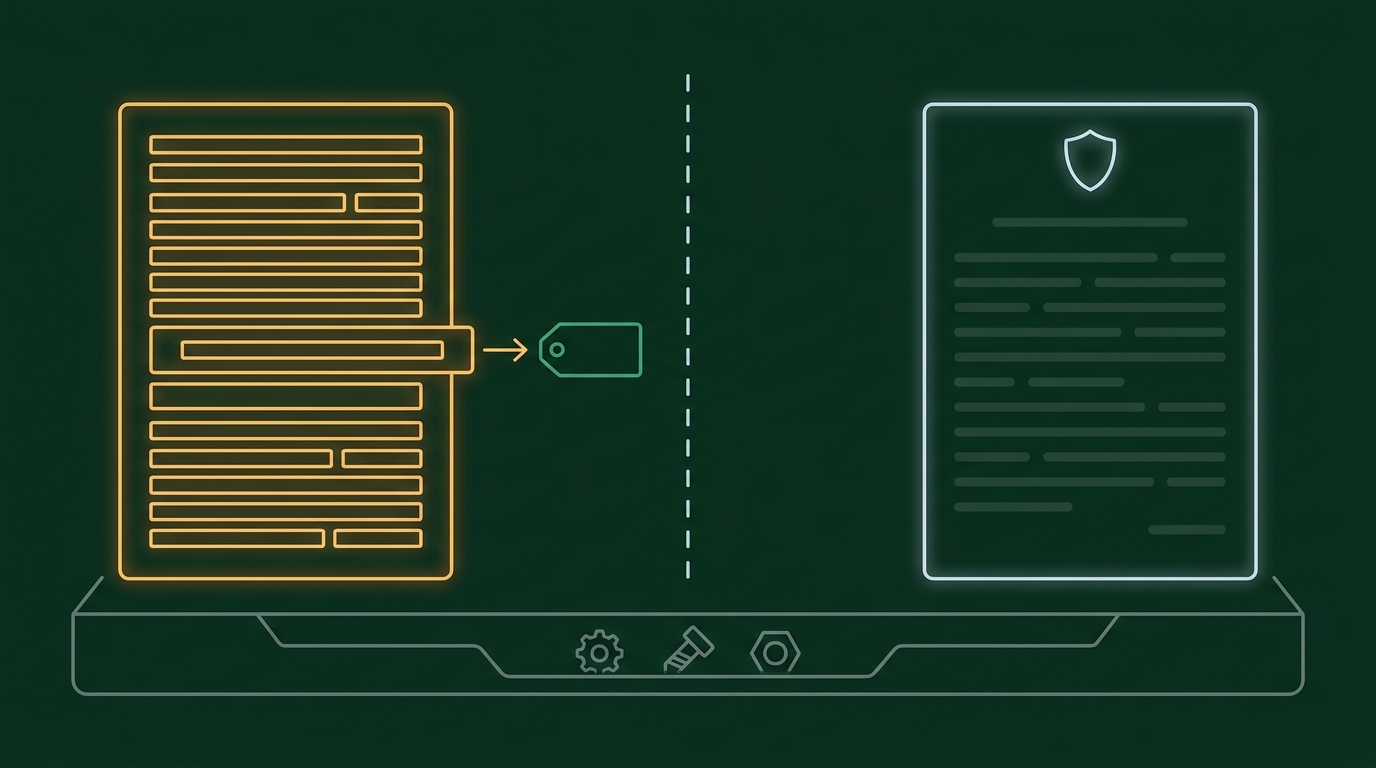
There are three official places to read it:
The regulations. The electronic Code of Federal Regulations publishes Part 774 in full, with every entry and its control parameters.
BIS. The agency’s Interactive Commerce Control List lets readers browse by category or search by keyword, with guidance alongside.
The Federal Register. Amendments are published here as they are made, which is how changes can be tracked before they reach the consolidated text.
Finding encryption items
Encryption entries sit in Category 5, the only category on the list split into two parts:
Part 1, Telecommunications: network and communications equipment, software and technology.
Part 2, Information Security: encryption and other security functions. This is where encryption entries sit.
How is the list arranged?
Entries are grouped into ten categories numbered 0 through 9, not 1 through 10. Each category covers a technology area: Category 0, for example, covers nuclear materials and miscellaneous items, and Category 9 covers aerospace and propulsion.
Within every category, entries are divided into five product groups, lettered A to E. Every entry sits where one category meets one product group.
Group | Covers | In practice |
|---|---|---|
A | Equipment, components and systems | The finished item and its parts |
B | Test, inspection and production equipment | What is used to make or verify the item |
C | Materials | What the item is made from |
D | Software | Code associated with the item |
E | Technology | Technical data and know-how for developing, producing or using the item |
Because the list works on these two axes, one technology can appear on it several times: once as equipment, once as the software that runs it, and once as the technology used to produce it. Each appearance has its own entry and its own control parameters.
What is not on the list?
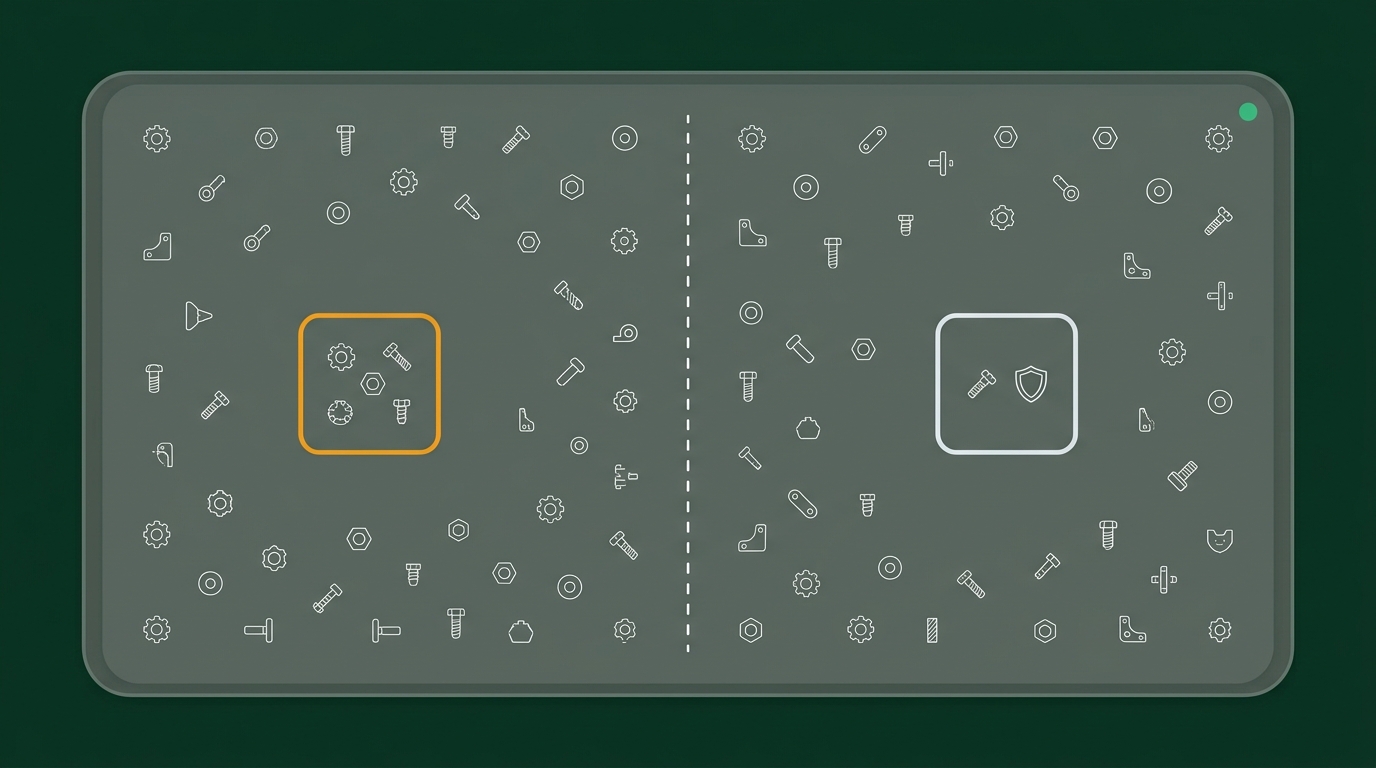
Two kinds of items fall outside the CCL, for opposite reasons. Mistaking either for a listed item is a common misclassification.
Items designed for military use
Items specifically designed or modified for military use generally do not appear on the CCL. Instead, they sit on the US Munitions List (USML), a separate list under separate regulations, administered by the State Department rather than Commerce. A component built for a military rocket motor is one example. The boundary between the two lists is set out in where military items sit instead.
Items that match no entry
An item can be subject to the EAR and still match no entry anywhere on the CCL. Such an item has no ECCN and carries the EAR99 designation instead, which covers items that match no entry at all. Most commercial products fall here, so the CCL describes only a minority of what crosses borders.
How does the list change?
BIS amends the CCL through rulemaking. Each change is published as a rule in the Federal Register with its own effective date, then consolidated into the regulations.
Changes follow decisions in multilateral export control regimes, shifts in US policy, and technological developments.
Amendment | What it does | What it means for a classification |
|---|---|---|
New entry | Brings an item under control | An item that was EAR99 may now carry an ECCN |
Removed entry | Releases an item from control | An item with an ECCN may now be EAR99 |
Changed parameters | Alters the technical thresholds inside an existing entry | The easiest change to miss, because the entry still exists, yet the item can move onto or off the list without changing at all |
A classification is accurate only as at the date it was made, so it should be dated and reviewed rather than treated as permanent.
Final thoughts
The Commerce Control List is a document before it is a code. It has an address in the regulations, a fixed structure of ten categories and five product groups, and clear edges: military items on one side and EAR99 on the other. It is also amended continually.
Knowing where the list sits and how it moves is what keeps a classification accurate after the day it was made.
Classified against today’s list. Declared under our registration.
Every classification starts from the list as it stands now. We match each item against the applicable entry, record the technical basis, and file the export declaration as your registered Exporter of Record.
Direct Line
Available on request
Shared after initial assessment.BACKED BY GCE LOGISTICS
25+ Years of International Trade & Compliance Leadership
Backed by decades of experience in global trade, IOR Service delivers the compliance frameworks, regulatory oversight, and market-entry expertise required for successful international operations. From highly regulated industries to complex cross-border projects, we help organizations move forward with certainty.Frequently asked questions
The CCL is the list. An ECCN is the five-character code assigned to an item after you match it to a specific entry on that list. The list exists independently of any product; the code only exists once a product has been classified against it. An item subject to the regulations that matches no entry has no ECCN at all and is designated EAR99 instead.
It is published as Supplement No. 1 to Part 774 of the Export Administration Regulations, in Title 15 of the Code of Federal Regulations. It is free to read through the electronic Code of Federal Regulations and on BIS’s Interactive Commerce Control List. Amendments appear in the Federal Register as they are made. Commercial databases reproduce and index the list, but none of them has exclusive access to it.
In Category 5, which is divided into two parts. Part 1 covers telecommunications, and Part 2 covers information security, which is where encryption entries sit. This two-part division is specific to Category 5 and often causes confusion, because none of the other nine categories is subdivided this way.
Into ten categories numbered 0 through 9, each covering a technology area. Within each category, entries are divided into five product groups lettered A through E: equipment, test and production equipment, materials, software and technology. Every entry sits in one category and one product group, which is why the same technology can appear several times across the list under different entries.
No. Items specifically designed or modified for military use are generally controlled under a separate list, administered by a different agency. And an item subject to the regulations that matches no CCL entry is designated EAR99, which can still carry a license requirement depending on the destination, the recipient, and the end use.
Regularly. Amendments are made through rulemaking and published in the Federal Register, each with its own effective date, then consolidated into the regulations. A change can add or remove entries, or alter the technical parameters within an existing entry. A parameter change is the easiest to miss, because the entry itself still exists. A classification is accurate only as at the date it was made.
Latest Blogs

What is an ESMA certificate? UAE product certification explained
Many businesses preparing to sell in the UAE are told they need “ESMA approval”. They then go looking for an authority that no longer runs the scheme. The Emirates Authority for Standardization and Metrology (ESMA) was merged into the Ministry of Industry and Advanced Technology (MoIAT) in 2020. The certification it was known for still exists, and the market still calls it by the old name. Knowing where it sits now saves weeks of applying to the wrong place. An ESMA certificate, as the market calls it, is UAE product conformity approval. It shows that a regulated product meets the applicable UAE, GCC, or international standards before it is sold. Today, it is issued under two MoIAT schemes: the Emirates Conformity Assessment Scheme (ECAS) and the Emirates Quality Mark (EQM). The legal basis is Federal Law No. 28 of 2001. The schemes are federal, so the same rules apply in every emirate. Because approval comes before market entry, the scheme follows the same principle as pre-shipment conformity verification in other markets.

What is TDRA approval? UAE type approval for wireless and telecom devices
Your device may already carry CE marking, have passed its RED tests, and be sold across Europe, and still be stopped at a UAE port. Almost every device sold today has a wireless function. In the UAE, that function needs its own approval before the product can be imported, sold, or even switched on, and the application cannot start until a UAE-registered dealer is in place. TDRA approval, formally called type approval, is that authorization. It is issued by the Telecommunications and Digital Government Regulatory Authority (TDRA) and confirms that a device meets UAE technical standards and will not interfere with national networks. It applies to radio and telecommunications terminal equipment (RTTE), meaning any equipment that connects directly to a public telecommunications network or contains an intentional radio transmitter. TDRA was known as the Telecommunications Regulatory Authority (TRA) until it was renamed in 2021. It is a federal regulator, so one approval covers every emirate.

EAR99: What the Designation Means, and When it Still Needs a License
EAR99 tells you what an item is not. Under the US Export Administration Regulations (EAR), it marks goods that fall under the regulations but are not listed on the Commerce Control List (CCL). What it does not tell you is where the item may go, who may receive it, or what it may be used for. Most shipments clear all three without a license. Some do not.